A patio can turn an underused backyard into the place where your family eats outside, hosts friends, and enjoys the Southern California weather. But the material beneath your feet affects more than the finished look. When weighing pavers vs concrete patio options, homeowners need to consider long-term durability, drainage, maintenance, design flexibility, and how the surface will perform in Los Angeles heat.
Neither material is automatically better. A clean concrete patio may be the right fit for a streamlined budget and a modern home, while pavers can deliver a more customized, repairable surface with stronger visual impact. The best choice depends on your property, how you plan to use the space, and the level of upkeep you are comfortable with over time.
Pavers vs Concrete Patio: The Core Difference
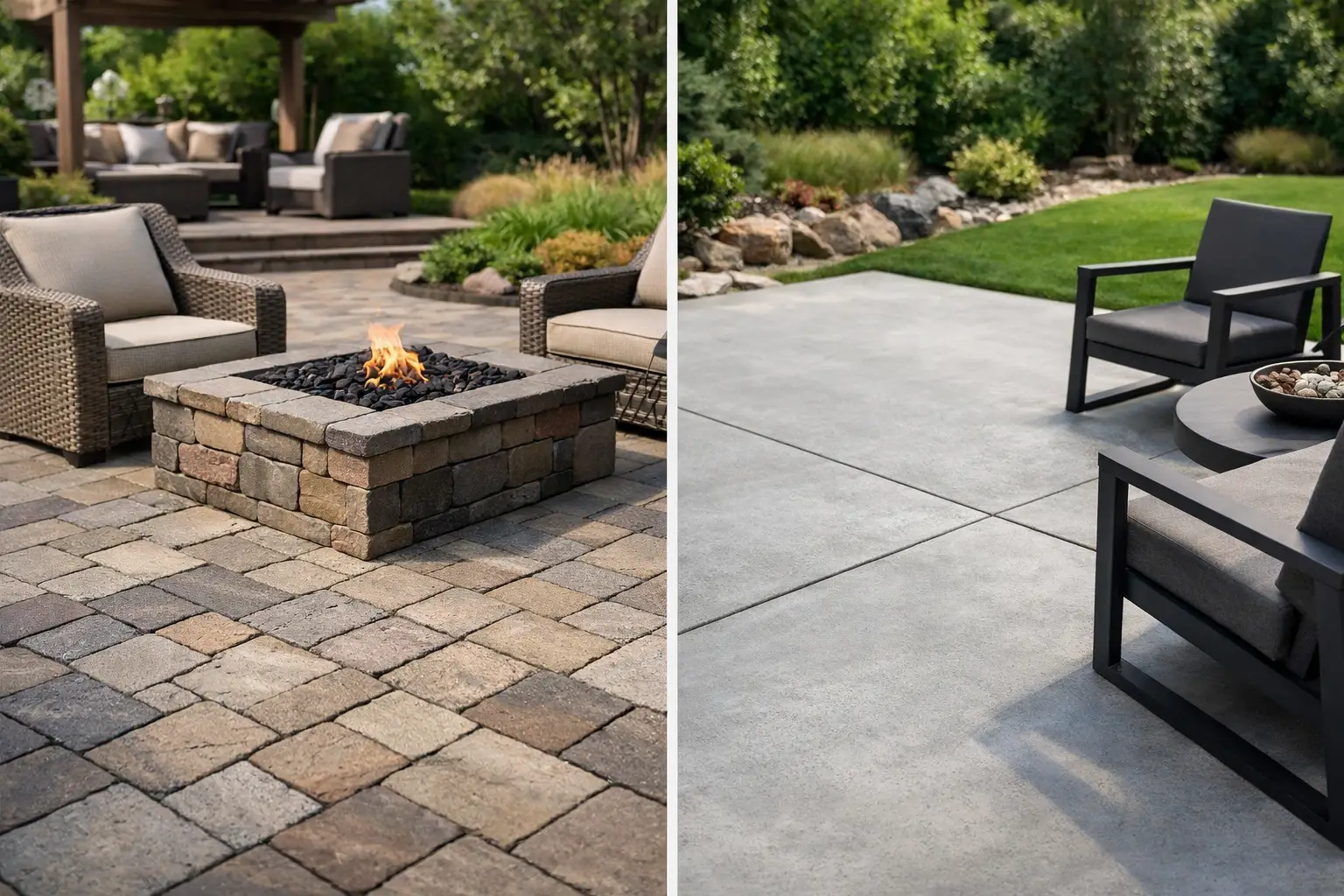
Concrete patios are typically poured as a continuous slab over a prepared base. The contractor forms the patio area, installs reinforcement and joints as needed, pours the concrete, and finishes the surface. It can be broom-finished for traction, smooth-finished for a cleaner appearance, stamped to resemble stone, or colored for added character.
Pavers are individual units made from concrete, natural stone, brick, or porcelain. They are installed over a compacted aggregate base and bedding layer, then secured with edge restraints and joint sand. Rather than one uninterrupted slab, a paver patio is a flexible system of many pieces.
That structural difference drives nearly every practical consideration. Concrete offers a simple, continuous surface. Pavers offer modularity, texture, and easier localized repairs. Both require proper excavation, grading, compaction, and drainage planning. Even premium materials will disappoint if the base preparation is rushed.
Upfront Cost and Long-Term Value
For many homeowners, cost is the first deciding factor. Standard poured concrete is generally less expensive upfront than a professionally installed paver patio. Its installation process can be faster, and material costs are often lower, especially for a straightforward rectangular layout.
The gap narrows when concrete includes decorative upgrades. Stamped patterns, integral color, exposed aggregate, borders, custom scoring, and higher-end sealers can significantly raise the price. A stamped concrete patio designed to mimic flagstone may cost more than expected while still remaining a slab that can crack over time.
Pavers usually require a higher initial investment because installation is more labor-intensive. The sub-base must be excavated and compacted carefully, and each field of pavers, border, and edge restraint must be installed with precision. Natural stone and large-format porcelain pavers can move the budget higher still.
However, value is not only about the initial estimate. If a small area of a paver patio settles, stains, or becomes damaged, individual pavers can often be removed and replaced. Repairing a cracked concrete slab is more difficult. A patch may be visible, and replacing a large section can be disruptive and costly.
For homeowners planning to stay in their home for years, pavers can be a worthwhile investment in curb appeal and usable outdoor living space. For a simple patio where budget control is the top priority, concrete remains a practical option.
Appearance and Design Flexibility
A patio should feel connected to the architecture of your home and the rest of your landscape. This is where pavers have a clear advantage. They are available in varied shapes, sizes, colors, textures, and laying patterns. A running bond pattern can complement a traditional home, while large-format pavers can create a crisp, contemporary outdoor setting.
Pavers also make it easier to build in visual details. Contrasting borders, geometric patterns, pathways that transition from the patio to the yard, and coordinated materials around a fire pit or outdoor kitchen can all be incorporated without making the project feel overdesigned.
Concrete can look elegant when it is thoughtfully finished. A smooth, light-colored concrete patio suits modern architecture particularly well, and a subtle broom finish offers a clean, durable surface. Decorative concrete can provide more personality through color and stamping, although patterns that imitate natural materials do not always age as gracefully as the real thing.
If your priority is a tailored, high-end hardscape that supports an outdoor kitchen, pergola, pool surround, or entertaining area, pavers offer more design possibilities. If you prefer minimal lines and a restrained palette, concrete may deliver exactly the look you want.
Durability in Southern California Conditions
Southern California patios face intense sun, dry heat, occasional heavy rain, and shifting soil conditions. These realities make installation quality especially important.
Concrete is strong and durable, but it is not immune to cracking. Control joints help guide where cracks are likely to occur, yet they cannot guarantee a crack-free slab. Soil movement, inadequate base preparation, tree roots, poor drainage, and temperature changes can all contribute to visible cracking. In many cases, a small crack is cosmetic. In others, it can create uneven areas that affect comfort, drainage, and appearance.
Pavers are not crack-proof, but their segmented construction allows them to accommodate minor ground movement better than a monolithic slab. If settling occurs in a localized spot, the affected pavers can often be lifted, the base corrected, and the surface reset. This repairability is one of the strongest practical arguments for pavers.
That said, pavers are only as stable as the base beneath them. Insufficient compaction can lead to shifting, low spots, or separated joints. A dependable contractor will assess existing soil, establish correct slope away from the home, and build the base to match the patio’s size, intended use, and site conditions.
Maintenance: What Each Patio Really Requires
Both options need regular care, but the type of maintenance differs.
Concrete patios should be swept, washed periodically, and kept free from standing water and harsh staining materials. Sealing can help protect decorative or colored concrete from moisture, stains, and fading, but sealers need reapplication over time. Hairline cracks may eventually need filling to keep them from collecting debris or allowing further deterioration.
Pavers also benefit from sweeping and occasional washing. Their joints may need polymeric sand replenished after years of weather exposure, particularly in high-traffic areas. Depending on the material and environment, some pavers may be sealed to enhance color and simplify cleaning. Weeds can appear between pavers when joints are neglected or organic debris accumulates, but proper joint sand and routine upkeep reduce that issue.
A common misconception is that pavers are always high-maintenance. In reality, a well-installed paver patio maintained on a reasonable schedule can be very manageable. The deciding question is whether you prefer periodic joint care and easy spot repairs, or a largely continuous surface that may eventually require crack management.
Drainage, Safety, and Everyday Use
A patio must direct water away from the home, not trap it against the foundation. Both concrete and paver patios can be sloped correctly, usually away from structures and toward suitable drainage areas. The right solution may also include channel drains, permeable pavers, gravel joints, or landscape grading, depending on the site.
Pavers can be especially useful where permeability is a priority. Permeable paver systems allow water to move through the joints and into a specially designed base below. They require careful engineering and are not necessary for every backyard, but they can help manage runoff on certain properties.
For safety, surface texture matters. A broom-finished concrete patio provides good traction, while smooth concrete can become slippery when wet. Many pavers offer naturally textured surfaces and joints that provide additional grip. Around pools, outdoor showers, or frequently used entertaining areas, the material’s slip resistance should be part of the conversation.
Also consider furniture and daily use. Concrete gives tables and chairs a very stable, continuous surface. Pavers should be installed level enough for furniture, but heavily textured stone or wide joints can make thin-legged chairs less comfortable. The right paver size and finish can prevent that issue.
When Concrete Is the Better Choice
Concrete is often the smarter choice when you want a clean patio with a controlled initial budget, a simple layout, and a contemporary appearance. It works well for small seating areas, side yards, and projects where the patio is only one part of a larger renovation budget.
It can also be a good fit when the existing yard has straightforward access and minimal grading challenges. A properly poured and finished concrete patio can serve a home well for many years, particularly when drainage and control joints are addressed from the start.
When Pavers Are Worth the Investment
Pavers are often the better match when visual customization, repairability, and long-term flexibility matter most. They are an excellent choice for larger entertaining patios, outdoor kitchens, fire features, walkways, pool areas, and homes where exterior design is a major part of the property’s appeal.
They are also worth considering if you expect to add future features. If plumbing, electrical, lighting, or landscape improvements require access beneath part of the patio later, pavers can often be removed and reinstalled with far less visible disruption than cutting and patching concrete.
Make the Decision Around Your Whole Outdoor Plan
The best patio material should support the full vision for your yard, not just fill an empty area behind the house. Consider how the patio will connect to fencing, landscaping, shade structures, grilling areas, and pathways. A thoughtful design-build approach helps prevent a common problem: installing a patio first, then realizing it does not accommodate the outdoor kitchen, drainage solution, or seating layout you wanted.
At WeFiks, we help homeowners plan hardscaping around the way they actually live, from material selection through professional installation. Whether you choose the tailored character of pavers or the clean simplicity of concrete, the lasting result comes from careful planning beneath the surface and craftsmanship you can enjoy every day.