A privacy fence has to do more than block a neighbor’s view. In Los Angeles, it often needs to soften street noise, define a compact yard, complement the home’s architecture, and hold up through intense sun and dry conditions. The best fence styles for privacy balance all of those needs with your budget, maintenance expectations, and local property requirements.
For some homeowners, a tall, solid wood fence delivers the warm backyard retreat they want. For others, a clean vinyl or composite fence provides privacy without the upkeep. The right choice depends on where the fence sits, how much exposure it receives, and whether privacy, curb appeal, security, or all three are your main priorities.
What Makes a Fence Truly Private?
A fence does not need to look heavy to provide privacy, but it does need to limit direct sightlines. Solid boards, tightly spaced panels, overlapping designs, and masonry walls are generally more effective than open pickets or widely spaced slats. Height matters too, particularly on sloped lots or properties where a neighboring second-story window looks down into the yard.
Before choosing a style, consider what you are trying to screen. A side-yard fence may only need to block a narrow view between homes. A backyard surrounding a pool, patio, ADU, or outdoor kitchen may need full visual separation and a more finished architectural look. Street-facing fencing brings another layer of consideration because appearance, gates, visibility, and local rules can affect the design.
Privacy fencing can also reduce the feeling of exposure without eliminating every view. A partially open horizontal fence with dense landscaping behind it, for example, can feel lighter than a fully solid wall while still making a patio more comfortable. This is often a smart approach for homeowners who want privacy without closing in a smaller yard.
Best Fence Styles for Privacy: 5 Strong Options
1. Solid Wood Fencing
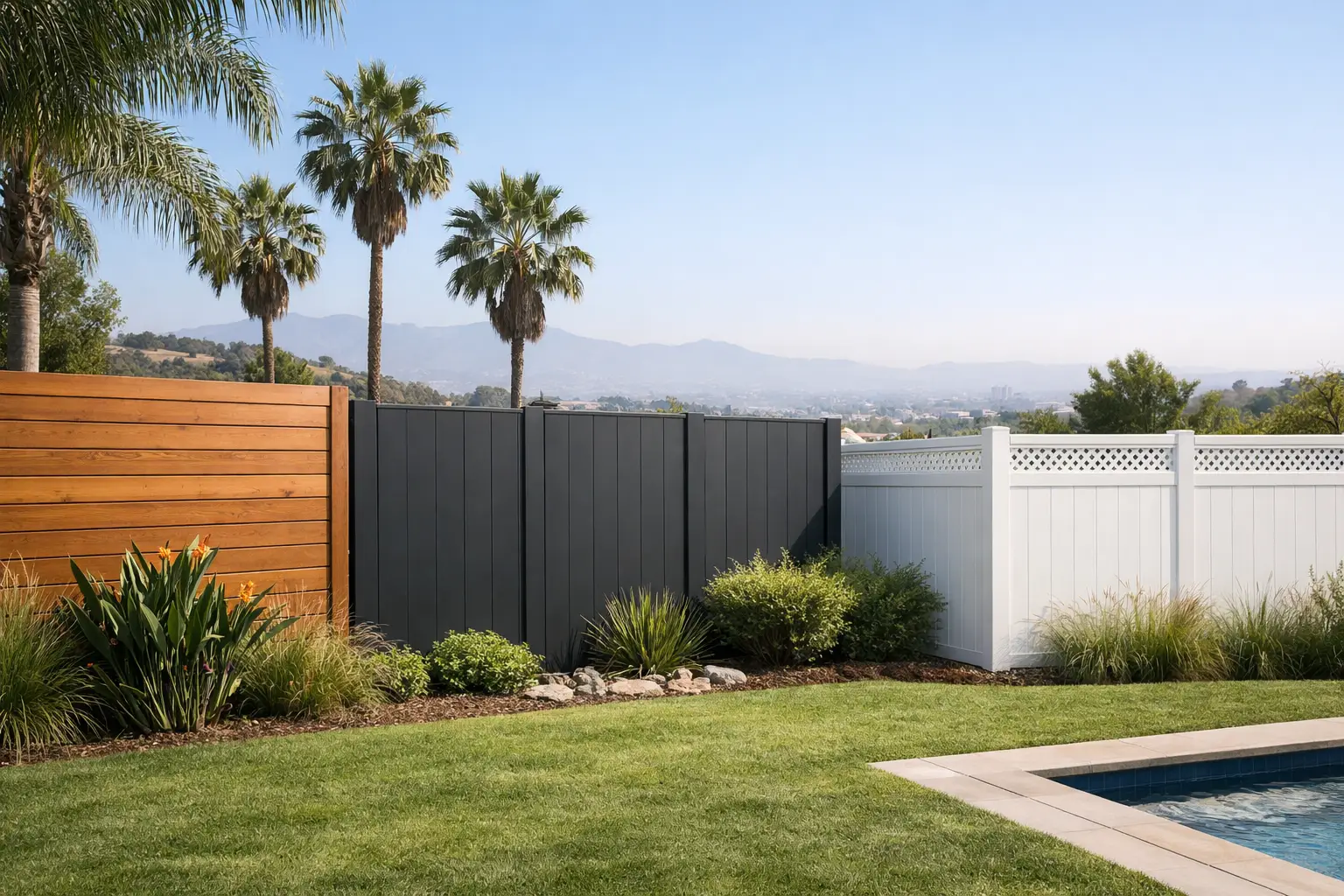
Wood remains one of the most popular privacy fence materials because it is adaptable, timeless, and easy to customize. Vertical board fences, board-on-board designs, and horizontal wood slats can all create a private enclosure with a noticeably different character.
A board-on-board fence is especially useful when complete coverage matters. The overlapping boards close the small gaps that can appear as wood naturally expands and contracts. It offers a more substantial look than a standard side-by-side wood fence and works well along property lines where neighbors are close.
Horizontal wood fencing has become a favorite for contemporary homes in Encino, Woodland Hills, and surrounding areas. Wider boards and clean lines can make a yard feel more refined, especially when coordinated with modern hardscaping or an updated patio. The trade-off is that horizontal construction requires careful installation and quality framing to prevent sagging or uneven spacing over time.
Wood needs periodic care. Sun exposure can fade boards, and moisture near sprinklers or planting beds can accelerate wear. Staining, sealing, and addressing damaged boards promptly will help protect the investment. For homeowners who value natural texture and custom design, that maintenance is often worthwhile.
2. Vinyl Privacy Fencing
Vinyl fencing offers a clean, uniform finish with minimal maintenance. It is available in solid panels, tongue-and-groove styles, and designs with decorative lattice or topper sections. A quality vinyl privacy fence will not need painting or staining, making it appealing for busy homeowners who want a polished look without a recurring maintenance schedule.
White vinyl is the traditional choice, but neutral tan, gray, and darker shades can work well with contemporary exteriors. Because vinyl panels are manufactured rather than individually milled, the final look is consistent from one section to the next. That consistency can be a benefit on long runs of fencing.
The main consideration is heat and impact resistance. Lower-quality vinyl can become brittle over time or warp in extreme conditions, so material selection and proper installation matter. Vinyl also offers fewer opportunities for truly custom proportions than wood. If your property has unusual grades, curved boundaries, or a highly specific architectural vision, a custom wood or metal design may provide more flexibility.
3. Composite Fencing
Composite fencing is a strong option for homeowners who want the appearance of wood with less ongoing maintenance. Made from a blend of recycled wood fibers and plastic materials, composite boards resist rot, insect damage, and many of the fading concerns associated with traditional lumber.
This style works particularly well for modern landscapes, pool areas, and homes with sleek exterior finishes. Composite privacy boards are often installed horizontally, creating a crisp, tailored appearance that pairs naturally with concrete pavers, stucco walls, and contemporary planting plans.
The upfront cost is usually higher than a basic wood fence, but the long-term value can make sense when reduced maintenance is a priority. Not all composite systems look or perform the same, so homeowners should compare board thickness, color stability, warranties, and the strength of the supporting frame. A premium fence system should feel solid, not flexible or hollow.
4. Metal and Wood Hybrid Fences
A metal and wood hybrid fence gives homeowners a custom, architectural result. Steel or aluminum posts and frames provide structure, while wood or composite infill boards bring warmth and privacy. The frame can be finished in black, bronze, or another color that coordinates with window trim, gates, or exterior lighting.
This option is especially effective when the fence is highly visible from a patio or entertaining area. The metal framing creates clean, deliberate lines, while horizontal slats can be spaced tightly enough to block direct views. It can also be designed with a small reveal between boards for airflow and filtered light.
A hybrid fence is not always the most economical choice, but it can elevate an exterior renovation in a way that standard panels cannot. It is a good fit when fencing is part of a larger project involving landscaping, a garage conversion, an ADU, or a full backyard upgrade. Coordinating the fence with retaining walls, gates, pathways, and planting areas creates a finished result rather than a collection of separate improvements.
5. Masonry, Stucco, and Block Walls
For the highest level of privacy, permanence, and sound reduction, masonry walls are difficult to beat. Concrete block walls with a smooth stucco finish are common throughout Southern California for good reason. They offer a solid visual barrier, stand up well to weather, and can be painted or textured to match the home.
Masonry is often the right solution along busy streets, alleyways, or properties with significant noise and visibility concerns. It can also provide a strong backdrop for outdoor living spaces, allowing lighting, climbing plants, artwork, or water features to become part of the design.
The investment is greater than most fencing systems, and construction may involve more site preparation, drainage planning, and permitting considerations. A wall should never be treated as a simple fence replacement. Proper footings, engineering where required, and coordination with property lines are essential. When planned correctly, however, a masonry privacy wall can add lasting value and a substantial sense of enclosure.
Choosing the Right Height, Gate, and Finish
A privacy fence is only as effective as its weakest section. A beautiful six-foot run can lose its purpose if the gate has large gaps, the side return stops short, or a change in grade exposes the yard from next door. Gates should match the fence style and include reliable hardware that will remain aligned with daily use.
Height should be determined early, before materials are ordered. Local requirements can vary based on whether the fence is in the front yard, side yard, backyard, near a driveway, or adjacent to a retaining wall. Homeowners should also confirm exact property lines rather than assuming an existing fence marks the legal boundary. This is particularly important on older properties where prior improvements may not have been accurately placed.
Finishes deserve equal attention. A cedar fence can be left to weather naturally or stained to preserve its tone. A black metal frame can create contrast against light stucco. A stucco wall can be designed to match the home or intentionally set apart as a landscape feature. These choices influence how the fence feels from both inside and outside the property.
Privacy Fencing That Fits Your Entire Property
The strongest fencing projects consider the whole site, not just the boundary line. A new fence may need to connect to an existing wall, accommodate mature trees, screen pool equipment, or create a private route to an ADU. It may also need to work with new drainage, lighting, irrigation, and hardscape plans.
That is where professional planning makes a difference. WeFiks helps homeowners shape fencing solutions around the way they actually use their outdoor spaces, with material and design recommendations that support long-term performance as well as curb appeal. A tailored fence can make a yard feel safer, quieter, and far more usable without compromising the style of the home.
Start with the view you want to remove and the outdoor space you want to enjoy more often. From there, the right privacy fence becomes a practical upgrade that makes every afternoon, gathering, and quiet moment at home feel more your own.